Matching the pipeline mat to the job is key to efficiency, safety and cost control.
Article Updated on: October 15, 2026
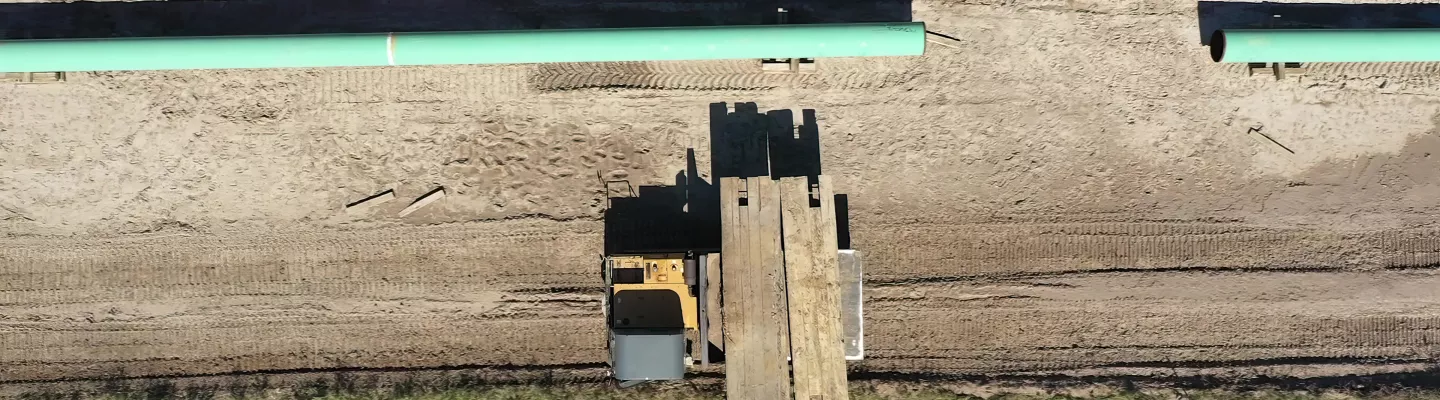
Pipeline projects break ground across a range of environments, from uncut forests to dense swamps to private rights of way abutting acres of farmland. Ground protection mats allow oil and gas operators and their contractors to access these sites without damaging the land. Acting as temporary roadways or staging areas, pipeline mats provide safe, stable passage and support for workers on foot and heavy machinery such as cranes, excavators, bulldozers and rubber-tired vehicles.
A plethora of choices exists within the world of ground protection mats, and a single project may require multiple styles. Choosing the best mat for the application and terrain can improve safety, keep people and equipment moving efficiently and potentially reduce overspending.
Use the guide below to quickly match ground protection matting solutions to common pipeline needs. Always keep in mind what matters most: terrain, traffic type and load requirements.
What project requirements should you confirm before choosing pipeline mats?
Before picking a pipeline mat type or mix of mats, confirm these job conditions:
- Equipment and loads: Identify your heaviest equipment and the kinds of forces involved, such as straight travel, turning, braking and lifting.
- Traffic type: Determine if you will use rubber-tired vehicles only, tracked equipment or both, and whether it involves repeated daily traffic or occasional crossings.
- Ground conditions: Assess if you are working on mud, swamp, sand, rocky ground, uneven topography or developed facility surfaces.
- Access need: Define your need for temporary roadways, staging pads, ditch crossings, bridge decking or protected crossings over sensitive areas.
- Project duration and reuse: Consider if you need short-term access or longer-term routes that must hold up to sustained use.
- Environmental and land impact: Note any concerns for minimizing rutting, compaction and disturbance, especially in ecologically sensitive areas.
- Logistics: Review freight constraints, equipment available for offloading and placement and how quickly mats must be installed and removed.
A knowledgeable mat vendor can help you translate these inputs into the right mat style, quantities and delivery plan.
What mats work best for pipeline projects?
The best ground protection mats for pipeline projects include heavy-duty timber mats, timber bridge mats, 3-ply laminated timber mats, light-duty timber mats and composite mats.
Mat Type | Best Used For | Terrain | Vehicle/ Equipment Type | Relative Weight |
|---|---|---|---|---|
Heavy-duty timber mats | Heavy access routes, ditching and pipelaying | Rough, rocky, muddy and/or uneven terrain | Tracked and heavy machinery | Heaviest option |
Timber bridge mats | Decking over ditches, swamps or waterways | Crossings and short-span bridges | Multi-ton vehicles or machinery | Heavy, high load capacity |
3-ply laminated timber mats | Facility work or laydown yards | Level to moderately uneven terrain | Rubber-tired vehicles only | Lightest of the timber mats |
Light-duty timber mats | Soft ground or non-rocky terrain | Mud, sand and developed surfaces | Mixed light-to-moderate traffic | 30% of the weight of hardwood timber mats |
Composite mats | Pedestrian walkways or fast installation zones | Level, developed or sensitive surfaces | Foot traffic and light equipment | Lightweight and easy to handle |
Heavy-duty timber mats: Best for most pipeline applications
Sturdy, rugged and resilient, heavy-duty timber mats are the most popular pipeline mats. They are used in roughly 90% of projects. Timber mats are typically the best choice for rough, uneven, rocky or muddy terrain and for providing access for heavy machinery such as pipelayers. Their rough surface aids with traction. Constructed from dense hardwood timbers bolted together with steel, timber mats are often the way to go when digging ditches or laying pipelines in undeveloped areas.
Timber bridge mats: Heavy-duty decking
Bridge mats are used as decking on top of temporary short-span bridges when site access requires crossing over ditches, waterways, oceanfront areas or swamps. Constructed from hardwood, they are strong enough to support the weight of multi-ton vehicles.
3-ply laminated timber mats: For rubber-tired vehicles
If your temporary roads are traveled by rubber-tired equipment only, 3-ply laminated mats might be your best bet. They are lighter, cheaper and easier to maneuver than traditional timber mats. They work on both level and uneven ground but are not built for rough terrain or recommended for use with heavy equipment.
Light-duty timber mats: Flexible and cost-effective
For environments that require more durability than 3-ply mats offer but are not rocky or mountainous, Timberlite™ light-duty timber mats are an ideal solution. They combine hardwood and pine timbers and weigh roughly 30% as much as hardwood timber mats, which helps to shave freight costs.
Composite mats: For weight, handling and surface protection
In some pipeline-adjacent areas, such as pedestrian walkways or locations where fast installation and consistent surfaces matter, composite mats can be a practical alternative to timber options. As with any mat, selection should be based on expected loads, traffic type and ground conditions, especially where heavy tracked equipment is involved.
When do heavy loads demand stronger pipeline mats?
Ground protection mat selection is not only about static weight. Pipeline work often creates high-stress moments that can drive the right choice. Intersections, tight turns and stop points may need more robust mats than straight access runs. Where the ground is uneven, mat bridging and stacking may be necessary to maintain a stable surface.
Should I rent or buy ground protection mats?
Whether to rent or buy often comes down to duration, reuse frequency, storage capacity and logistics. Renting can be a strong fit when you need flexibility to scale quantities, less burden on storage and maintenance and faster access to the right mix of mat types. Buying can make sense when you have ongoing, high-volume mat needs across multiple projects and the ability to store, manage and maintain an inventory.