
A confined space is an enclosed or partially enclosed area that isn’t designed for people to work in continuously, has limited or restricted entry and exit, and exposes workers to risks from a hazardous atmosphere, engulfment, or entrapment. In Australia, confined spaces are defined and regulated under the model WHS Regulations and AS 2865. A space doesn’t have to be small to qualify, and a trench or excavation can become one depending on its conditions.
What counts as a confined space under AS 2865?
A space is generally a confined space when it meets these conditions together: it’s enclosed or partially enclosed; it’s not designed or intended primarily for human occupancy; and it has the potential for a hazardous atmosphere, a risk of engulfment, or restricted entry and exit. Common examples include manholes, sewers, pits, tanks, silos, vessels, pump wells, ducts, and some covered or deep excavations.
Is a confined space always small?
No. Size isn’t the test. Large tanks, silos, and vessels are confined spaces, while a small but open and well-ventilated pit may not be. What determines it is the combination of restricted entry or exit, the space not being designed for occupancy, and the potential for a hazardous atmosphere, engulfment, or entrapment.
When does a trench or excavation become a confined space?
This is the question most civil teams ask, and the answer isn’t depth alone. An open trench with free air movement and clear access usually isn’t a confined space. It can become one when conditions restrict the atmosphere or exit, for example when it’s partially covered or sheeted over in a way that traps air, when heavier-than-air gases can accumulate at the base, or when access is restricted to a single difficult point.
When connecting to a live sewer of storm water line, or working in contaminated ground, confined space entry precautions must be taken. In larger excavations where a smaller excavator/diesel machine is lowered into the excavation, steps need to be taken to ensure air quality is not toxic, with use of extraction fans, gas monitors and the addition of DPF and Diesel Oxidation Catalysts on the exhaust. Where a trench is shored, the shoring itself doesn’t make it a confined space, but the combination of depth, covering, and atmosphere might. When in doubt, assess it as one.
Confined space hazard categories
The main hazard groups in confined space work are:
- Hazardous atmosphere: oxygen deficiency or enrichment, flammable gases, and toxic gases such as hydrogen sulphide and carbon monoxide
- Engulfment: by liquids or free-flowing solids such as grain, sand, or sludge
- Entrapment: by converging walls or a configuration that traps a worker
- Physical hazards: falls, moving parts, heat, and restricted movement
Do you need a permit to enter a confined space?
Entry to a confined space generally requires a written confined space entry permit, issued after a risk assessment by a competent person. The permit typically records the atmospheric test results, the controls in place, the people authorised to enter, the standby arrangements, and the rescue plan. Atmospheric testing is done before entry and monitored continuously during the work. Local Water Authorities and different industrial plants may have other requirements due to what you may be exposed to, always check.
How confined space entry works, in brief
Once a space is classified as a confined space and a permit is in place, safe entry is built in layers: atmospheric monitoring, ventilation, an access and anchor system, fall protection, and a rescue plan with a trained standby person. For the full setup, the equipment each layer needs, and how to choose between a tripod, davit, or gantry, see our confined space entry and rescue hub.
What equipment do you need for confined space entry?
Once a space is classed as a confined space, each layer of a safe entry maps to equipment United Rentals hires. For specifications and help choosing between a tripod, davit, or gantry, see the confined space entry and rescue hub.
- Atmospheric monitoring: confined space gas detector
- Ventilation: CSE vent fan
- Access and anchor: heavy duty tripod, davit arm, portable gantry
- Fall protection: essential safety harness, fall arrest blocks
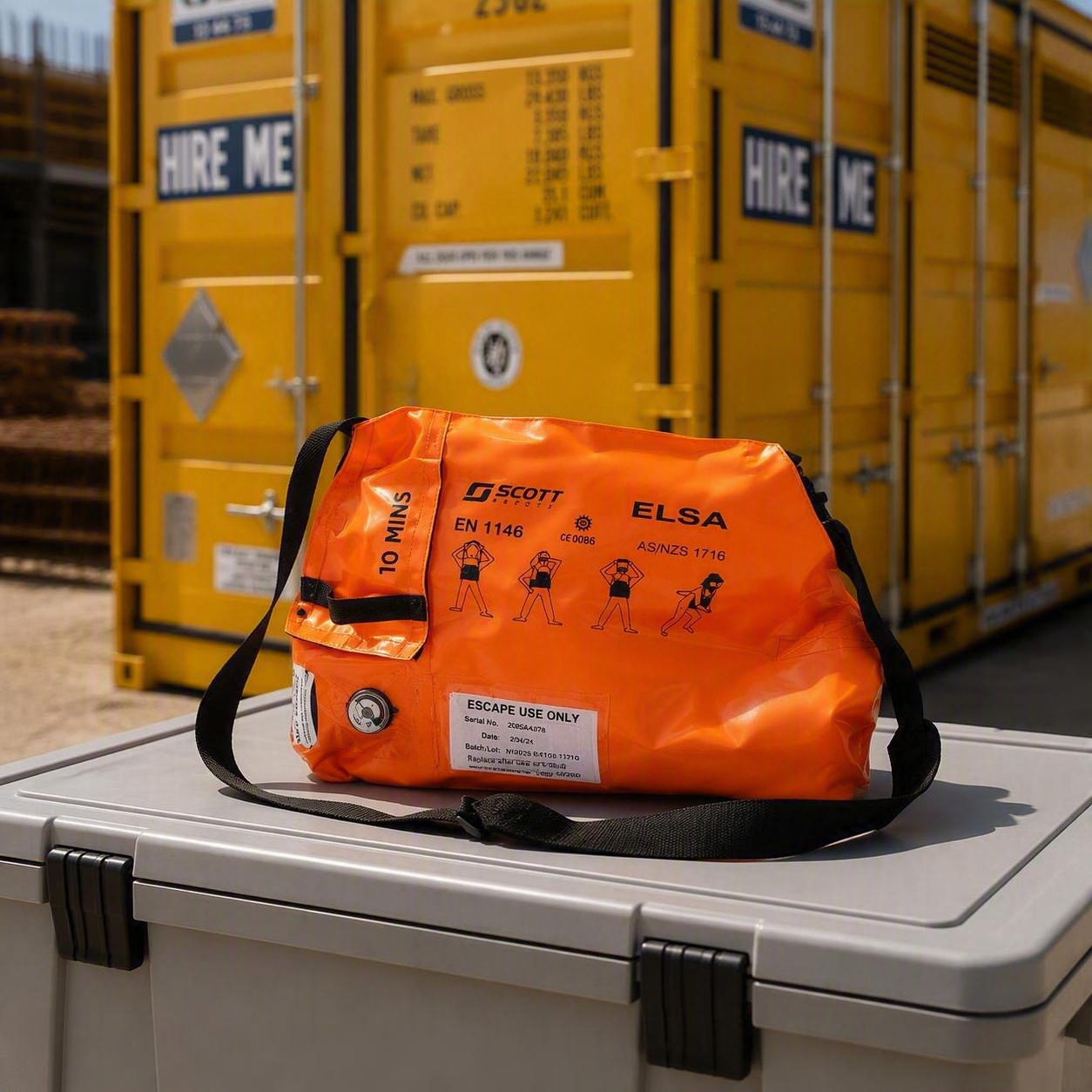
- Rescue: roll rescue stretcher, ELSA escape kit
Confined space classification FAQs
Is a 1.5m trench a confined space?
Depth alone doesn’t decide it. A standard open trench with free airflow usually isn’t, but covering, gas accumulation, or restricted exit can make it one. Assess each excavation on its conditions.
Do I need a permit for a confined space?
Generally yes, under the model WHS Regulations, after a risk assessment and atmospheric testing.
Who can issue a confined space entry permit?
A competent person, as defined under the WHS Regulations.
What gases do I test for?
Typically oxygen level, flammable gases (LEL), and toxic gases such as hydrogen sulphide and carbon monoxide, using a calibrated multi-gas detector. Other gases may need to be monitored, depending on local conditions, such as Volatile Organic Compounds and other more site specific gases.
Does a covered or roofed area count as a confined space?
It can. Partial enclosure that restricts airflow or exit is one of the triggers. The classification depends on whether the enclosure creates the potential for a hazardous atmosphere or restricts entry and exit.
Is a confined space the same as a hazardous area?
No. A hazardous area is classified around the risk of an explosive atmosphere. A confined space is classified on enclosure, restricted access, and the potential for atmospheric, engulfment, or entrapment hazards. A space can be one, the other, or both.